Single-cell Open Lab
Dr. Jan-Philipp Mallm
The Single-cell Open Lab provides an infrastructure for processing cells, preparing libraries for single-cell sequencing as well as spatial omics. New users will be trained in most of our workflows so they can perform all experimental steps autonomously in the scOpenLab. We offer regular seminars to introduce new users to our portfolio. Systems can be booked online and a training session / detailed project discussion can be arranged. We also supports setting up new methods in collaborations.
Instrumentation
Available readouts
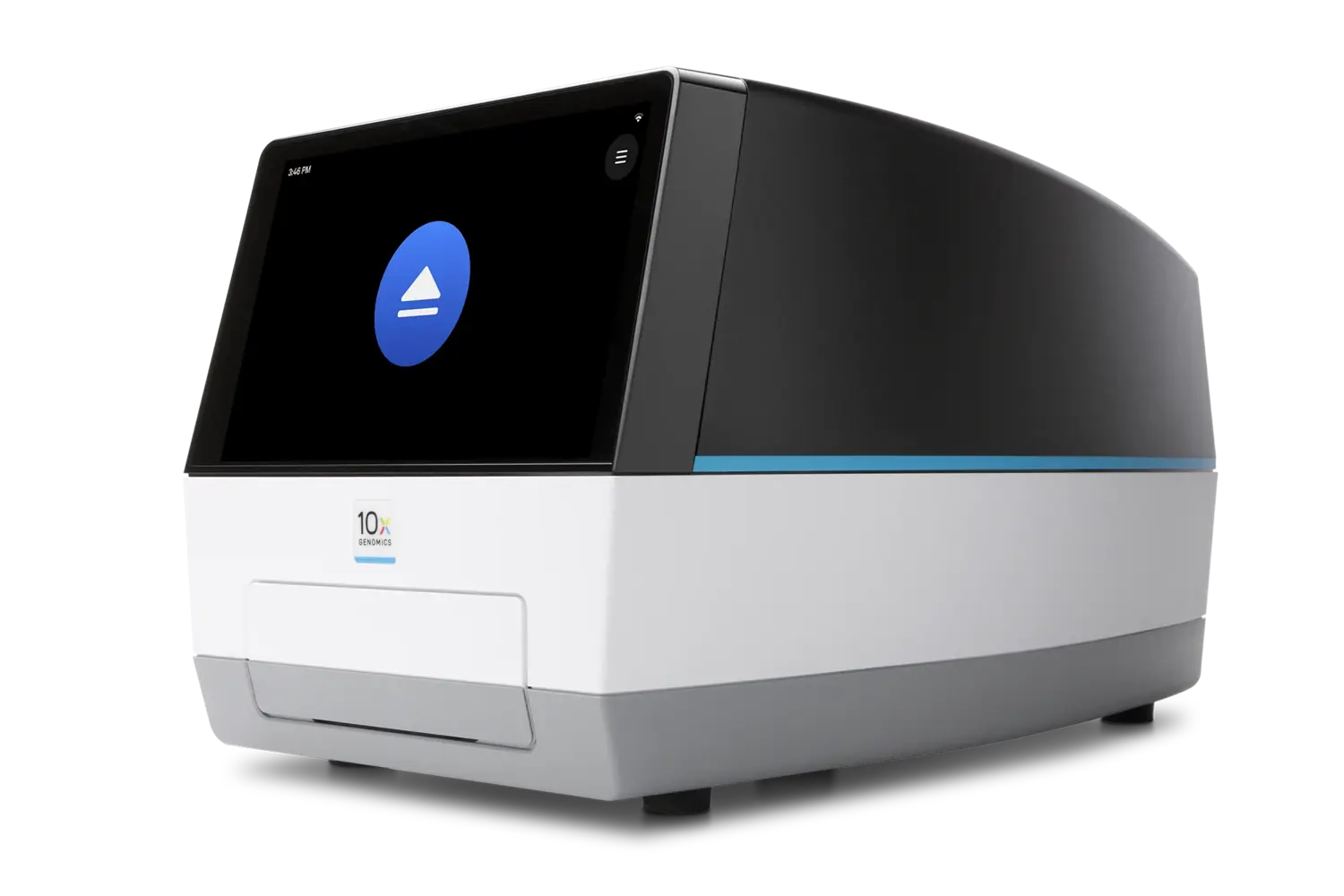
Chromium system (www.10xgenomics.com)
- scRNA-seq (3' / 5' counting)
- scVDJ-seq (+scRNA-seq)
- scATAC-seq
- multiome kit - RNA+ATAC
- CITE-seq & cell hashing
- numerous sample pooling strategies
- scDNA+RNA-seq (HIPSDR-seq)
- scChIP-seq + RNA-seq
The preparation of a clean single-cell suspension is key for a successful experiment. We can provide protocols / guidelines for dissociation, nuclei extraction from frozen tissue and nuclei preparation for scATAC-seq. All cell / nuclei suspensions can be analyzed with an automated cell counting system at the scOpenLab prior to loading.
Illumina Single Cell 3' RNA (https://www.illumina.com/products/by-type/sequencing-kits/library-prep-kits/single-cell-rna-prep.html)
Bead-based but microfluidics free workflow for generating 3' single-cell RNA-seq libraries. Cells and barcoding beads are mixed via several vortexing steps and RNA is eventually barcoded in a gel.
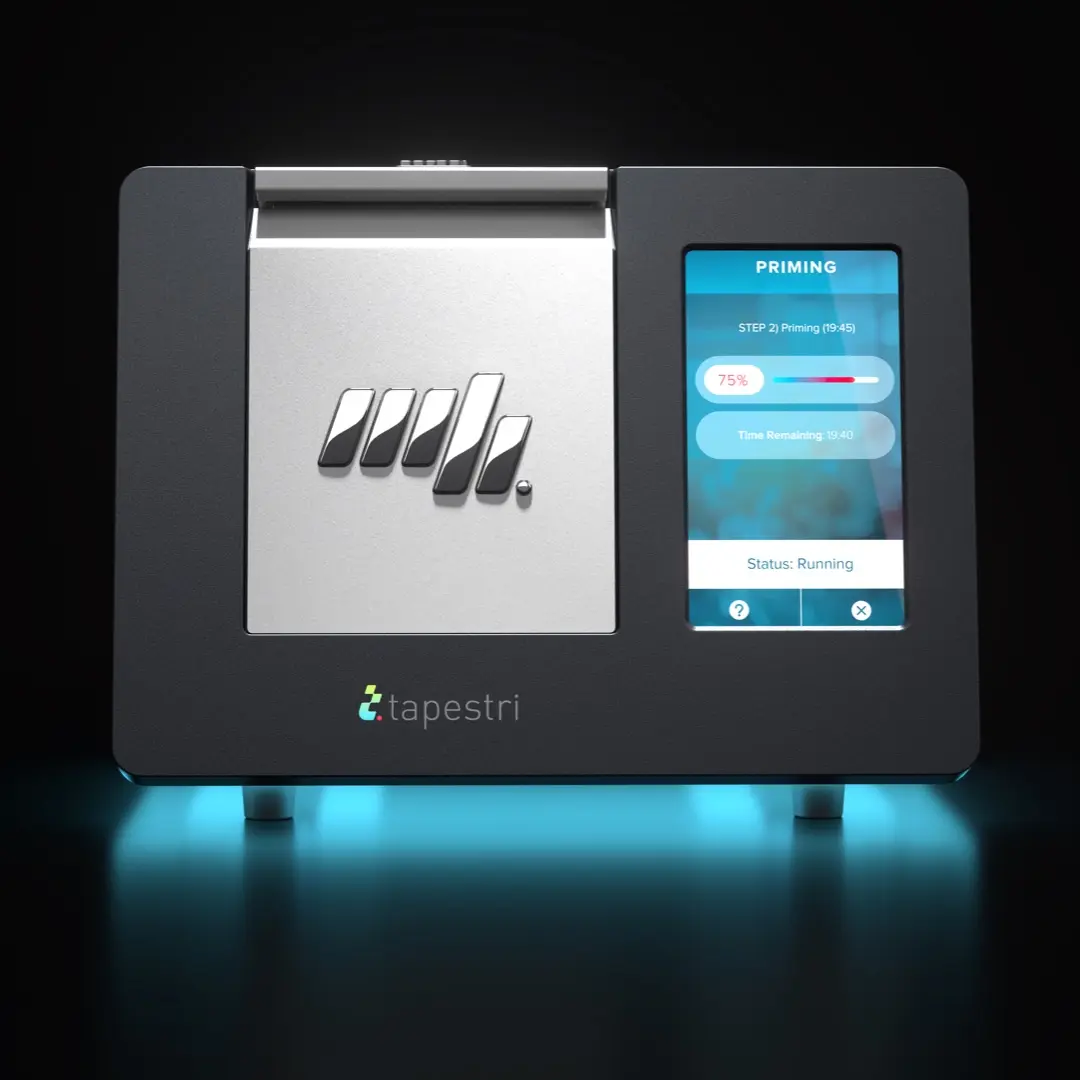
Tapestri (www.missionbio.com)
- targeted scDNA-seq
- SDR-seq
- protein + DNA-seq
For targeted single-cell sequencing we can provide access to the Tapestri (scDNA-seq) system. Panels for targeted amplification can be designed or directly purchased from the companies - for further information please visit their websites.
Combinatorial barcoding
Cells or nuclei can also be used a reaction compartments to barcode RNA in a cell-unique fashion. Two workflows are established in the scOpenLab from parse biosciences and scale biosciences (now part of 10X Genomics).
https://www.parsebiosciences.com/
Automized on plates
- scRNA-seq (SMART-seq 2.5, muta-seq and others)
- scHiC
- scWGBS
- G&T-seq
- scNMT-seq
- scWGS / scWES (PTA)
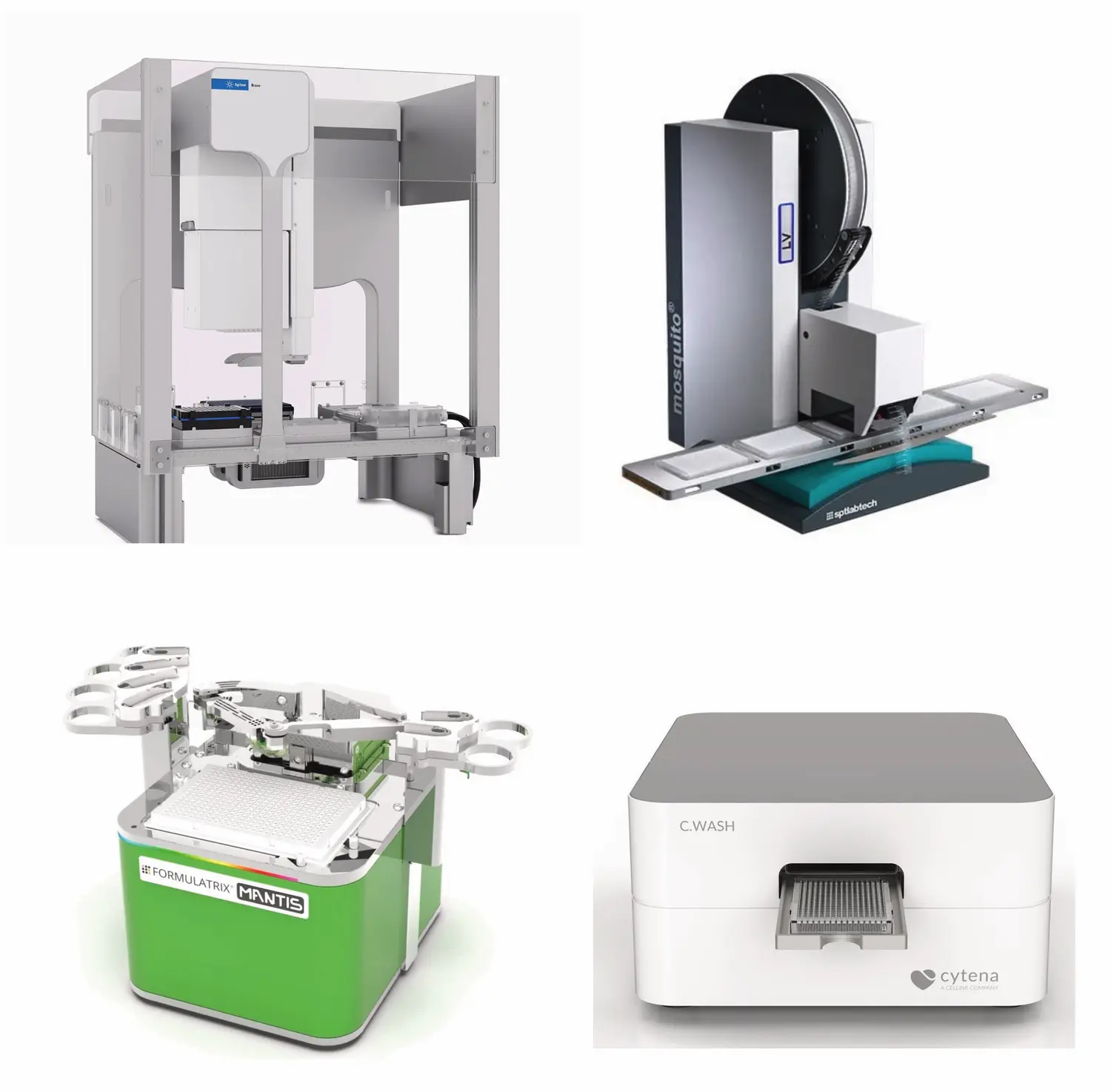
Automated workflows are conducted with the Bravo, Mosquito, C.wash and Mantis systems, depending on the reaction volume. Customized protocols can be programmed and run on all machines and we are happy to work with you for setting up those protocols.
RNAscope HiPlex Assay
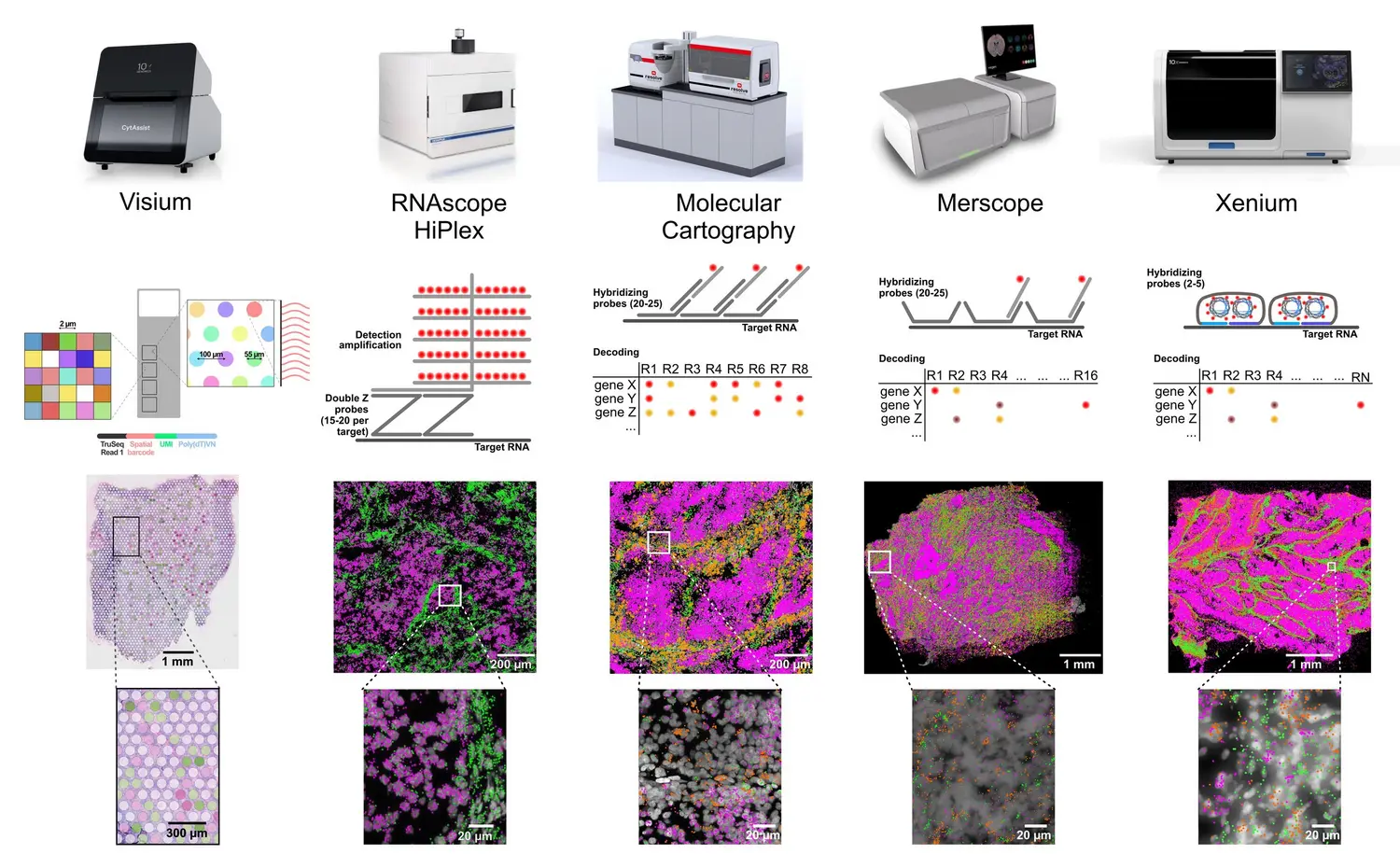
We offer test chemistry, guidance and experimental support for HiPlex Assays. Both fresh frozen und FFPE samples can be analysed with pre-defined targeted FISH probes and single-cell resolution. Staining and imaging equipment is available via our booking system.
10x Genomics Visium slide
While RNAscope provides single-cell resolution for up to 48 different pre-defined targets, visium sildes cover the whole transcriptome using spotted barcodes with a diameter 55 µm or with 2x2 µm square in case of visium HD. All steps including optimization, imaging, Cytassist transfer and library preparation can be done in our spatial lab.
Merfish
Merfish enables users to detect up to 500 transcripts in fresh frozen and FFPE samples. Subsequent antibody readouts can be performed for five protein targets using prelabeled secondary antibodies.
Xenium
The Xenium chemistry can detect up to 400 transcripts in fresh frozen and FFPE samples. Signal amplification via a rolling circle reaction allows the analysis of isoforms or fusions. Also 5k panels can be run on our system.
Each methodology has its merits (apart from the number of transcripts). If you are lost in space, we are happy to provide guidance in selecting the best technology for your project. Please discuss your spatial projects at an early stage with us - please do not order anything prior to a project discussion!
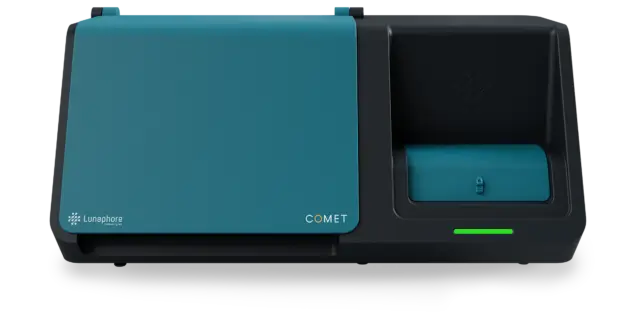
COMET by Lunaphore
We offer training and test antibodies to familiarize users with the seqIF workflow. Both fresh frozen und FFPE samples can be analysed. Staining and imaging is performed automatically by the system after successful panel optimization.
MACSima by Miltenyi
The MACSima allows detection of over 100 proteins via directly labelled antibodies. The fluorophore is either bleached or removed using the REAdye technology. Regular glass slides can be used in this workflow with diifferntly sized imaging chambers. We offer support in starting projects, testing antibodies and training to use this instrument.
Each methodology has its merits. If you are lost in space, we are happy to provide guidance in selecting the best technology for your project. Please discuss your spatial projects at an early stage with us - please do not order anything prior to a project discussion!
Available readouts
Single-cell sequencing
Chromium system (www.10xgenomics.com)
- scRNA-seq (3' / 5' counting)
- scVDJ-seq (+scRNA-seq)
- scATAC-seq
- multiome kit - RNA+ATAC
- CITE-seq & cell hashing
- numerous sample pooling strategies
- scDNA+RNA-seq (HIPSDR-seq)
- scChIP-seq + RNA-seq
The preparation of a clean single-cell suspension is key for a successful experiment. We can provide protocols / guidelines for dissociation, nuclei extraction from frozen tissue and nuclei preparation for scATAC-seq. All cell / nuclei suspensions can be analyzed with an automated cell counting system at the scOpenLab prior to loading.
Tapestri (www.missionbio.com)
- targeted scDNA-seq
- SDR-seq
- protein + DNA-seq
For targeted single-cell sequencing we can provide access to the Tapestri (scDNA-seq) system. Panels for targeted amplification can be designed or directly purchased from the companies - for further information please visit their websites.
Automized on plates
- scRNA-seq (SMART-seq 2.5, muta-seq and others)
- scHiC
- scWGBS
- G&T-seq
- scNMT-seq
- scWGS / scWES (PTA)
Automated workflows are conducted with the Bravo, Mosquito, C.wash and Mantis systems, depending on the reaction volume. Customized protocols can be programmed and run on all machines and we are happy to work with you for setting up those protocols.
Spatial transcriptomics
RNAscope HiPlex Assay
We offer test chemistry, guidance and experimental support for HiPlex Assays. Both fresh frozen und FFPE samples can be analysed with pre-defined targeted FISH probes and single-cell resolution. Staining and imaging equipment is available via our booking system.
10x Genomics Visium slide
While RNAscope provides single-cell resolution for up to 48 different pre-defined targets, visium sildes cover the whole transcriptome using spotted barcodes with a diameter 55 µm or with 2x2 µm square in case of visium HD. All steps including optimization, imaging, Cytassist transfer and library preparation can be done in our spatial lab.
Merfish
Merfish enables users to detect up to 960 transcripts in fresh frozen and FFPE samples. Subsequent antibody readouts can be performed for five protein targets using prelabeled secondary antibodies.
Xenium
The Xenium chemistry can detect up to 400 transcripts in fresh frozen and FFPE samples. Signal amplification via a rolling circle reaction allows the analysis of isoforms or fusions. Also 5k panels can be run on our system.
Spatial proteomics
COMET by Lunaphore
We offer training and test antibodies to familiarize users with the seqIF workflow. Both fresh frozen und FFPE samples can be analysed. Staining and imaging is performed automatically by the system after successful panel optimization.
MACSima by Miltenyi
The MACSima allows detection of over 100 proteins via directly labelled antibodies. The fluorophore is either bleached or removed using the REAdye technology.
Each methodology has its merits (apart from the number of transcripts / proteins). If you are lost in space, we are happy to provide guidance in selecting the best technology for your project. Please discuss your spatial projects at an early stage with us - please do not order anything prior to a project discussion!
How to get started
1) Visit our introductory seminar
For all new users we offer a single-cell sequencing seminar covering the different techniques, pros & cons, project design and lab logistics. The introduction is mandatory for all new scOpenLab users.
At the following dates the next mandatory introductions will take place:
- 11.12.2025 9:30 - 11:00 AM TP3 B4.101 - Single cell sequencing If you would like to participate, please send an e-mail to: scopenlab(at)dkfz.de (subject: introductory seminar)
- 05.02.2026 9:30 - 11:00 AM TP3 B4.101 - Single cell sequencing Please register here: https://indico.dkfz.de/event/1467/
- 12.02.2026 9:30 - 11:00 AM TP3 B4.101 - Spatial omics Please register here: https://indico.dkfz.de/event/1493/
- 21.05.2026 9:30 - 11:00 AM TP3 B4.101 - Single cell sequencing Please register here: https://indico.dkfz.de/event/1469/
- 17.09.2026 9:30 - 11:00 AM TP3 B4.101 - Single cell sequencing Please register here: https://indico.dkfz.de/event/1470/
2) Make an appointment with us to discuss your project in detail (optional but highly recommended)
3) Create an account for booking machines online: ppms link. You will also find a collection of protocols and further material on our ppms webpage.
4) Book machines for your first experiment and request assistance
For all new users we will offer an introduction on an individual basis for each machine / technique in the lab according to their project.
We offer some central chemistry for e.g. optimizations, SMART-seq, barcodes, spatial transcriptomics workflows - please refer to the order section in our booking system.
5) Run your experiment with a scOpenLab staff member
Team
-
Katharina Bauer
-
Dr. Pooja Sant
-
Laura Giese
-
Denise Keitel
-
Dr. Michele Bortolomeazzi
-
Dr. Cindy Pamela Ulloa Guerrero
-
Laura Schütze
-
Dr. Jan-Philipp Mallm